Send e-mail

EPS reliably protects sensitive equipment—but also places high demands on how it is handled in the workplace. At Kilchenmann, we have been committed to consistent separation and recycling for over 25 years. Here’s a look at our processes, statistics, and how we put responsibility into practice in our day-to-day operations.
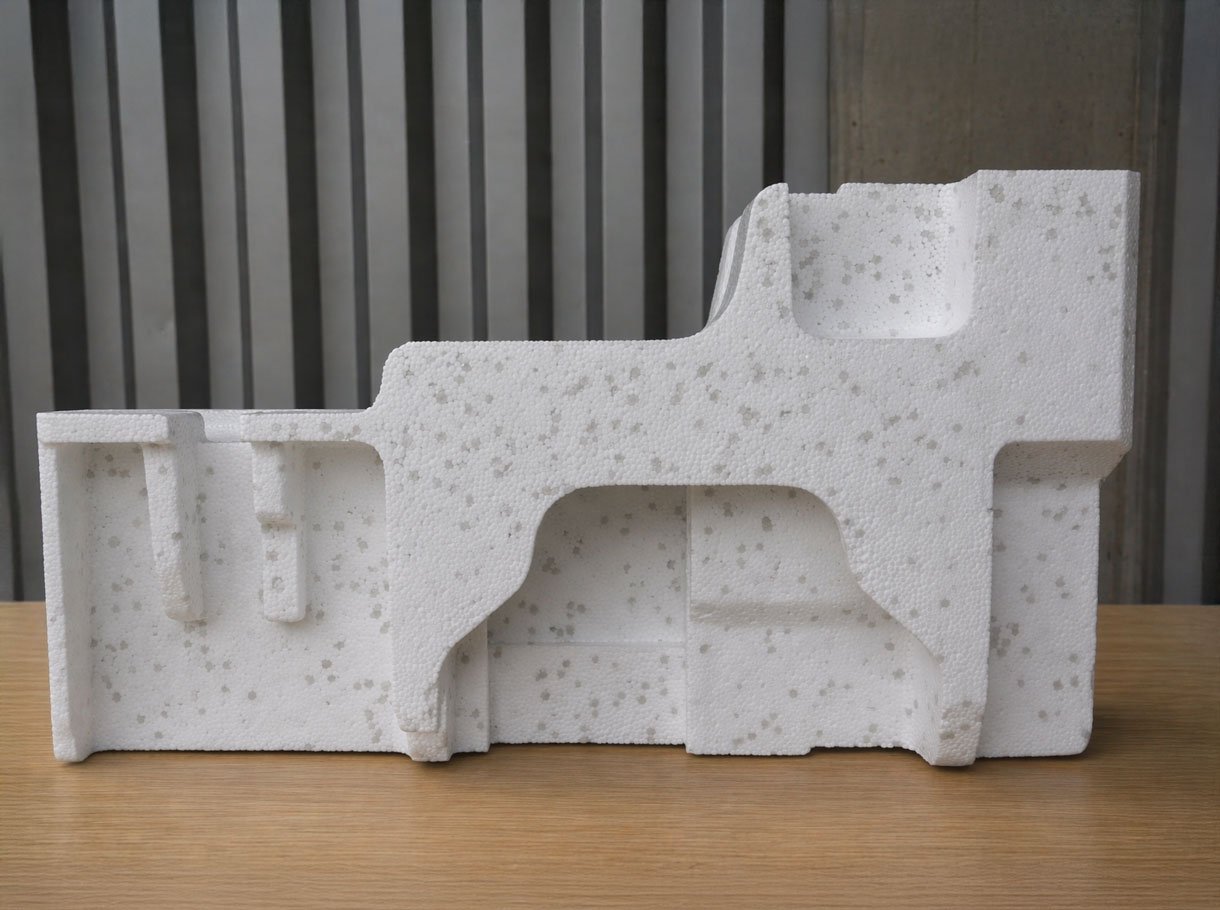
Expanded polystyrene, or EPS for short, is ubiquitous in the AV industry, even if we don’t actively use it ourselves. Many devices that arrive at our facility are packaged in EPS by the manufacturers. The material reliably protects sensitive equipment during transport and ensures that components arrive undamaged at our facility or directly at our customers’ locations.
This protection is particularly crucial for high-quality audio, video, and communication technology. Damage during transport not only leads to delays but also to additional resource consumption due to replacement shipments or repairs. In this context, it becomes clear why EPS remains so widespread.
At the same time, handling this material poses challenges from a sustainability perspective.
Handling at Kilchenmann
EPS is petroleum-based, non-biodegradable, and can only be effectively recycled in practice if it is collected separately and kept clean. Since we have no direct influence over the packaging used by manufacturers, we at Kilchenmann have deliberately focused our efforts on how we handle it within our own operations.
Our approach to handling EPS has evolved over many years. While the material used to be disposed of as combustible waste—as is common in many places—we began developing an alternative solution about 28 years ago. Since then, we have consistently separated, collected, and fed EPS into a recycling loop.
From waste to recyclable material
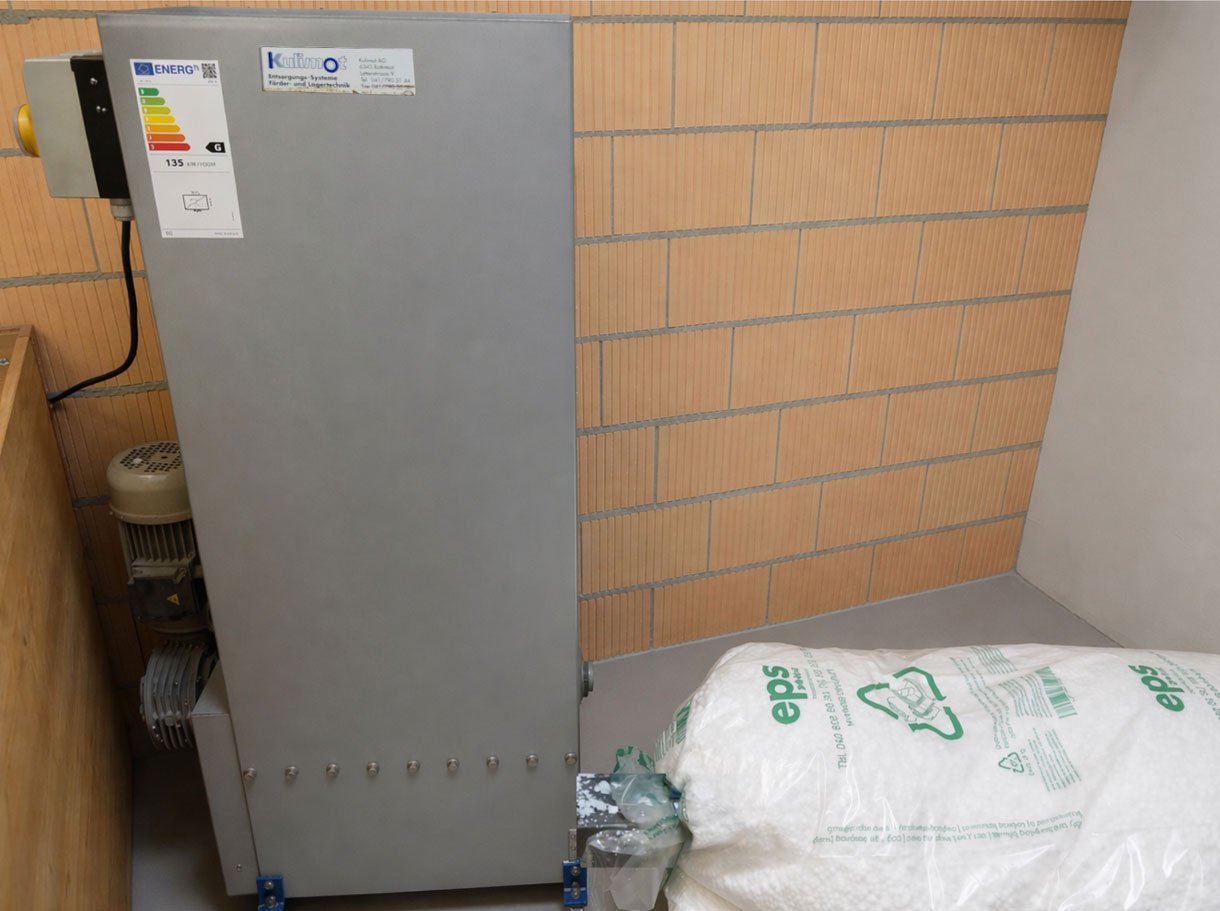
EPS from installations is returned, temporarily stored on-site, and then regularly shredded on-site. For this purpose, we use a special shredder that prepares the material for the subsequent recycling process.
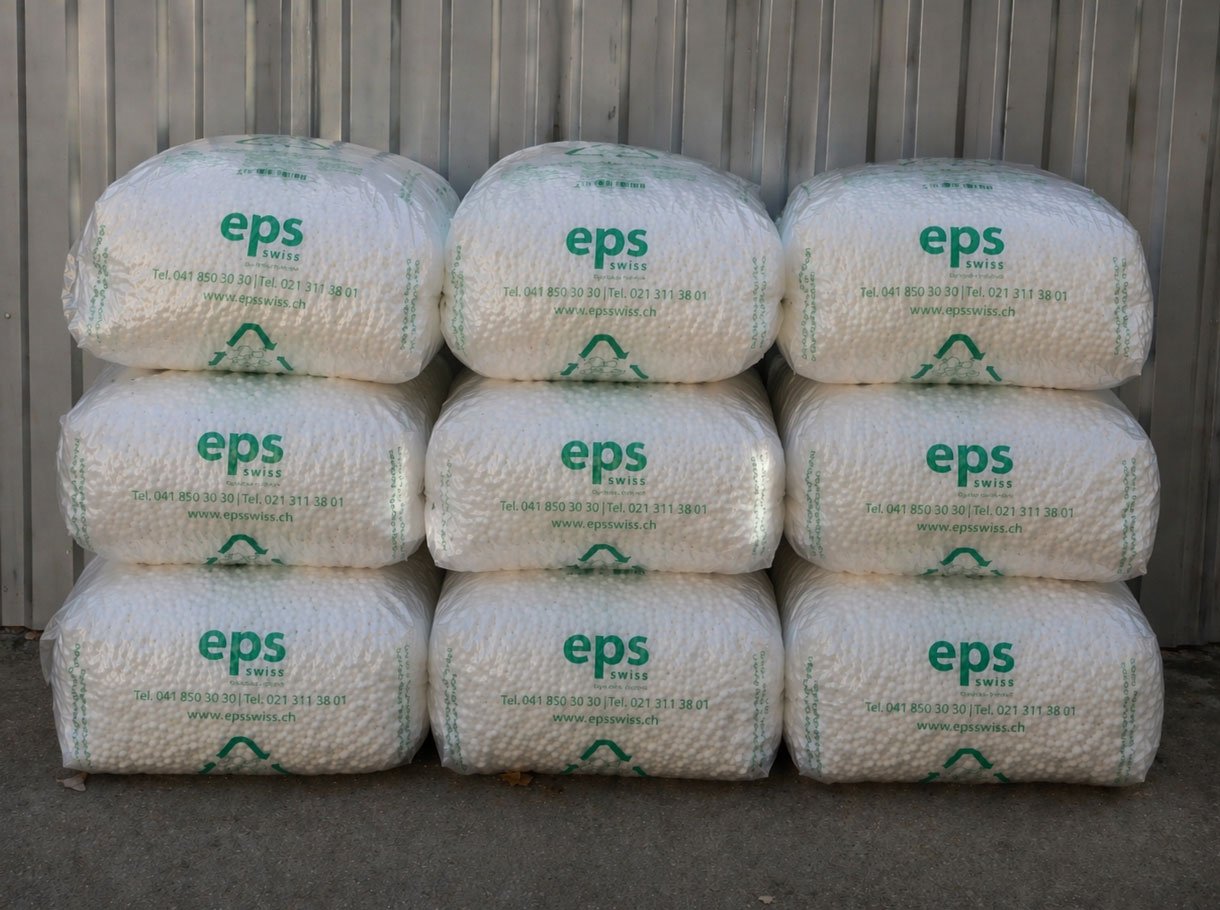
The shredded EPS is collected in special recycling bags. As soon as a sufficient quantity is reached, pickup is arranged. The material is then processed by specialized partners and returned to the EPS production cycle.
Clean separation is crucial here. Only pure EPS free of foreign materials can be recycled efficiently. Materials that look similar but have a different composition must be consistently excluded.
Reusing the shredded material as packaging is not practical in everyday use. Due to its static properties and fine structure, it would become lodged in appliances and, for example, obstruct ventilation slots.
Trends in Material Quantities
The figures also show that this approach is having an impact. Compared to the previous year, the volume of EPS was significantly reduced. While approximately 113,000 liters were generated in 2024, this figure dropped to 81,000 liters in 2025. This represents a reduction of 28.3 percent.
This development is the result of a more conscious approach to material flows and the continuous optimization of internal processes.
Recycling as Part of the Overall System
The collected and processed EPS is further processed in specialized facilities. There, it is sorted, cleaned, and processed into granules. These granules, in turn, serve as raw material for new products, such as insulation materials.
In Switzerland, this cycle operates very efficiently today. A large portion of the material can be recycled and reused, thereby reducing the need for new raw materials.
Economic Efficiency and Responsibility
In this context, sustainability also means taking economic factors into account. The collection and recycling of EPS incur costs, such as those for recycling bags and logistics.
At the same time, it is clear that this effort is worthwhile. As early as the late 1990s, we were able to significantly reduce disposal via regular household waste by switching to separate recycling. This resulted in savings that outweigh the additional costs.
In this case, recycling is not only an environmentally friendly solution but also an economically sound one.
Limits and opportunities for influence
Nevertheless, the issue remains complex. Alternative packaging solutions are not always available or do not meet the same requirements for protection and standardization. Reliable packaging is crucial, especially for sensitive technology and international supply chains.
This makes it all the more important to leverage our influence where we can. This applies to internal organization as well as to communication with partners and manufacturers.
As a result, sustainability issues and opportunities for optimization are regularly discussed in supplier meetings and are also incorporated into our supplier evaluations.
An ongoing process
Our approach to EPS serves as a prime example of how sustainability works in a technical context. It is less about completely eliminating materials and more about making conscious use of existing materials and processes.
For us, this means taking responsibility where we have direct influence. At the same time, we monitor market developments and continuously assess how processes can be further optimized.
Step by step, this leads to a use of materials that meets both technical requirements and environmental goals.